A Walk
For You

A self-guided walk through Estrela and Campo de Ourique, Lisbon.

Five stops. One optional sixth. About two hours — longer if you linger.

Built for a Wednesday that wants to feel like a weekend. Or a weekend in need of quieting down. Every stop is within walking distance — no metro required. Each one has a question tacked on. Answer it, ignore it; either's a result.

Walk alone. Go slowly. The prompts are suggestions, not homework. You can leave notes; they stick around. No one's expecting you anywhere.

Jardim da Estrela

Praça da Estrela, Estrela

Enter through the main gate. Walk past the bandstand, find a bench near the pond. Lisbon's first romantic garden when it opened in 1842 — a very Victorian bit of engineering for people who needed somewhere quiet to fall out with themselves. Best in the early morning, if you're the type.

The ducks won't give you space. The teenagers won't give you seats. The grandmothers and the dog-walkers will, eventually.

If you stopped improving for this hour, what would you do instead?
Basílica da Estrela

Across the square

The marble looks heavier than it is. Give the door a push — it opens quietly, even on weekdays. Inside, one of Lisbon's better-kept silences.

Queen Maria I commissioned it in 1779, a thank-you for the birth of her son. Pombaline style — the structural language the city came up with after the 1755 earthquake knocked half of it down. Some of the silence is two hundred years old.

What have you rebuilt in the aftermath of something that collapsed?
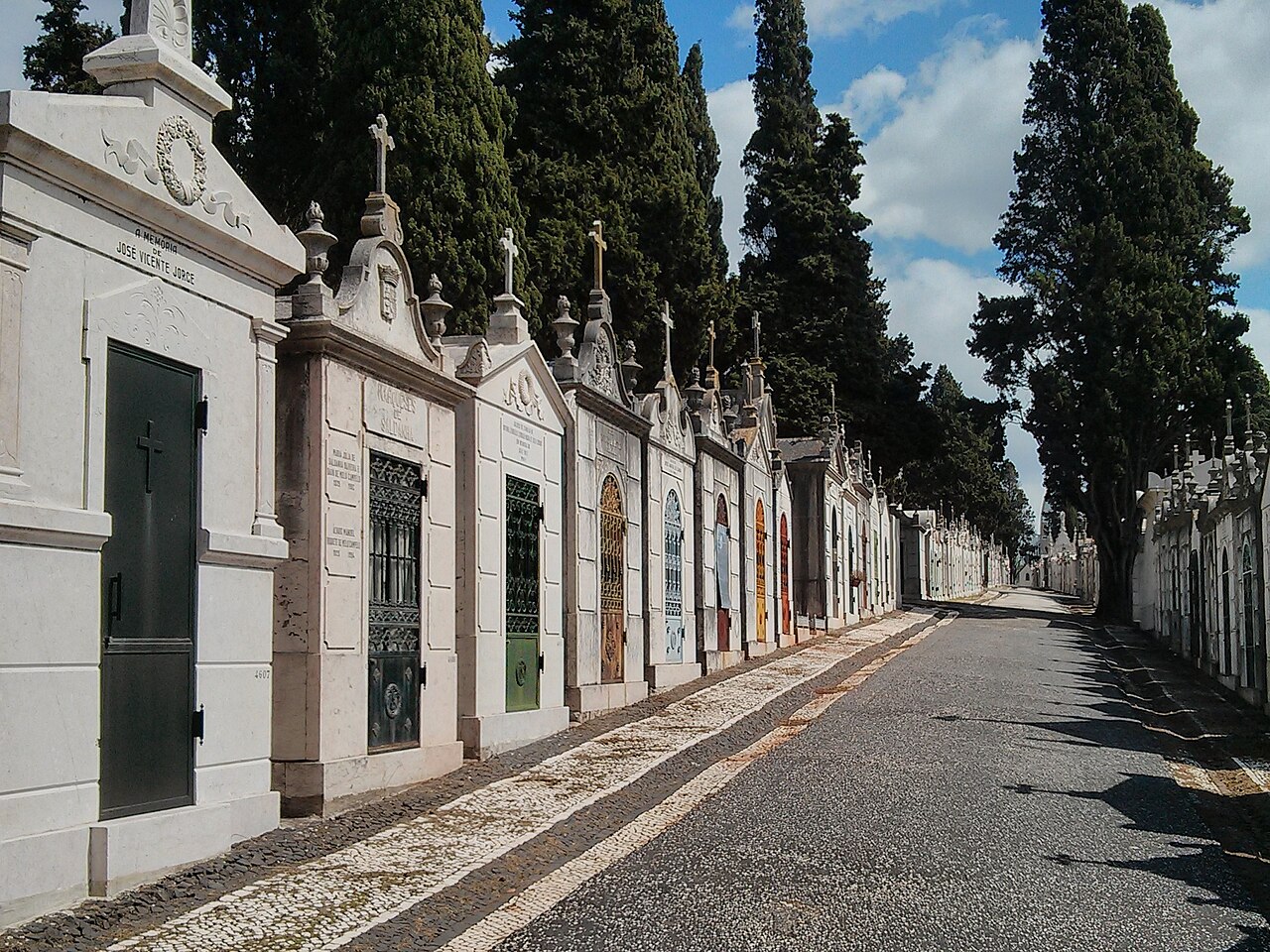
Cemitério dos Prazeres, Lisbon — a street of neoclassical mausoleums.

Cemitério dos Prazeres

15 min west, along Calçada da Estrela then Rua Saraiva de Carvalho

Lisbon's most beautiful cemetery — and that's saying something. Laid out like a small neoclassical town, with avenues and streets and mausoleums where the houses should be. Walk to the far end; the view opens onto the 25th April Bridge and the Tagus.

Pessoa was here first, before they moved him to the Jerónimos Monastery in 1985. A few of his ghosts still wander these rows, still preferring other people's names to their own.

What would your eighty-nine-year-old self want you to remember about today?
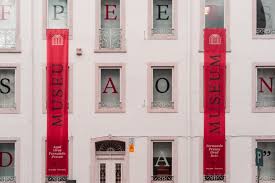
Casa Fernando Pessoa, Lisbon — the house museum with red banners spelling 'Museu Pessoa' down its façade.

Casa Fernando Pessoa

Rua Coelho da Rocha 16, Campo de Ourique

Ten minutes east. Pessoa lived here for the last fifteen years of his life, variously, as about seventy different people. The house is now a small museum and library; every book he ever annotated is on its shelves.

Álvaro Siza redesigned the interior in 1993 — one of Portugal's greatest architects looking after one of its greatest writers. Go upstairs slowly.

If you had to keep only one of your coulds, which one?
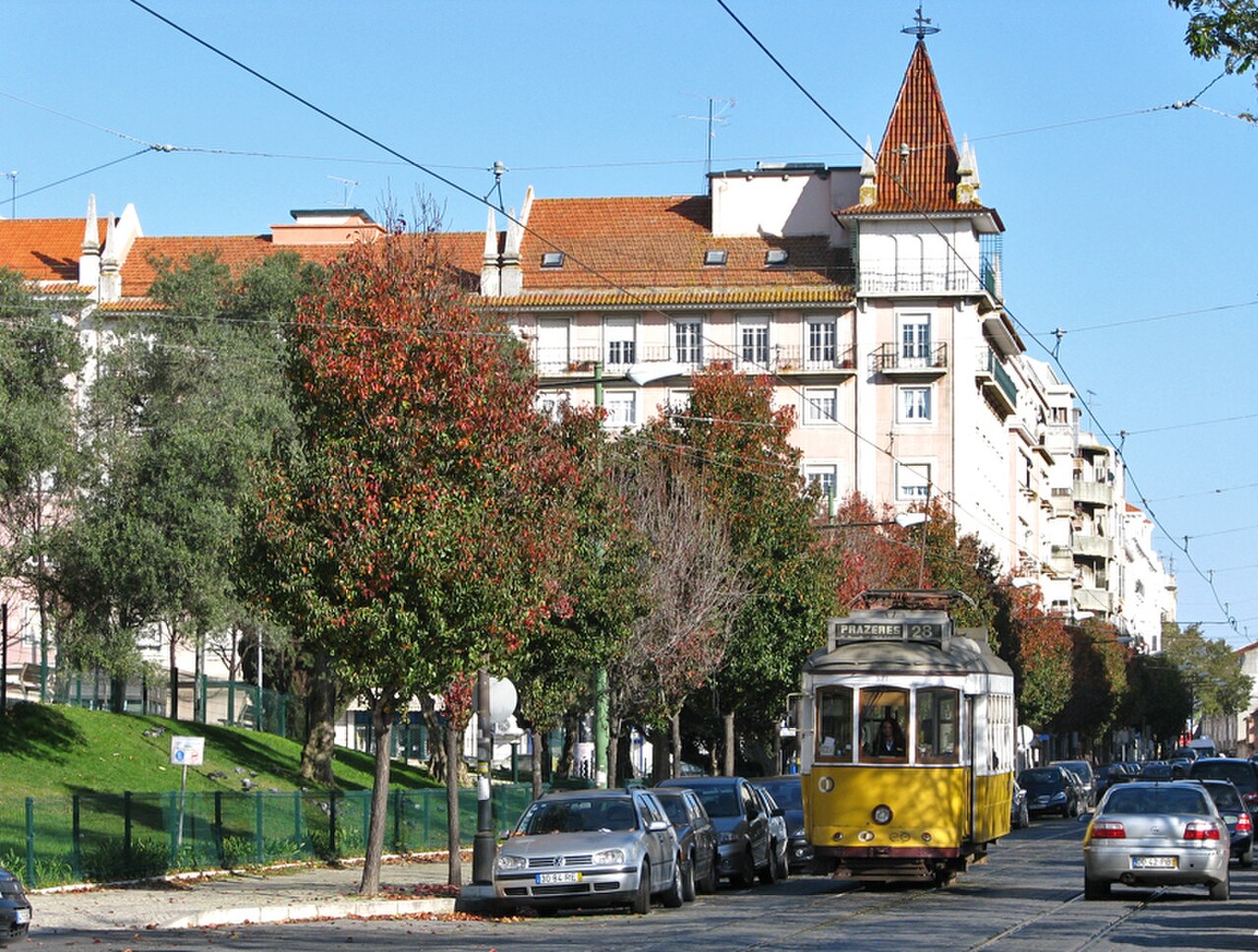
Campo de Ourique neighbourhood, with a yellow vintage tram passing tree-lined streets.

Jardim da Parada

Praça Coronel Eduardo Galhardo, Campo de Ourique

Five minutes on. Technically called Jardim Teófilo Braga; realistically, just "the garden" to anyone in Campo de Ourique. Not famous, not grand — a village square that happens to be in the middle of a capital.

Kids playing. Neighbours reading the paper. The market's around the corner if you need coffee, olives, or flowers on the way home. Try not to spend ten minutes fondling the kiwis.

You're home. Good timing.

Looking out — what is one small thing you've made here that you didn't know you would?

If you're not ready to go home

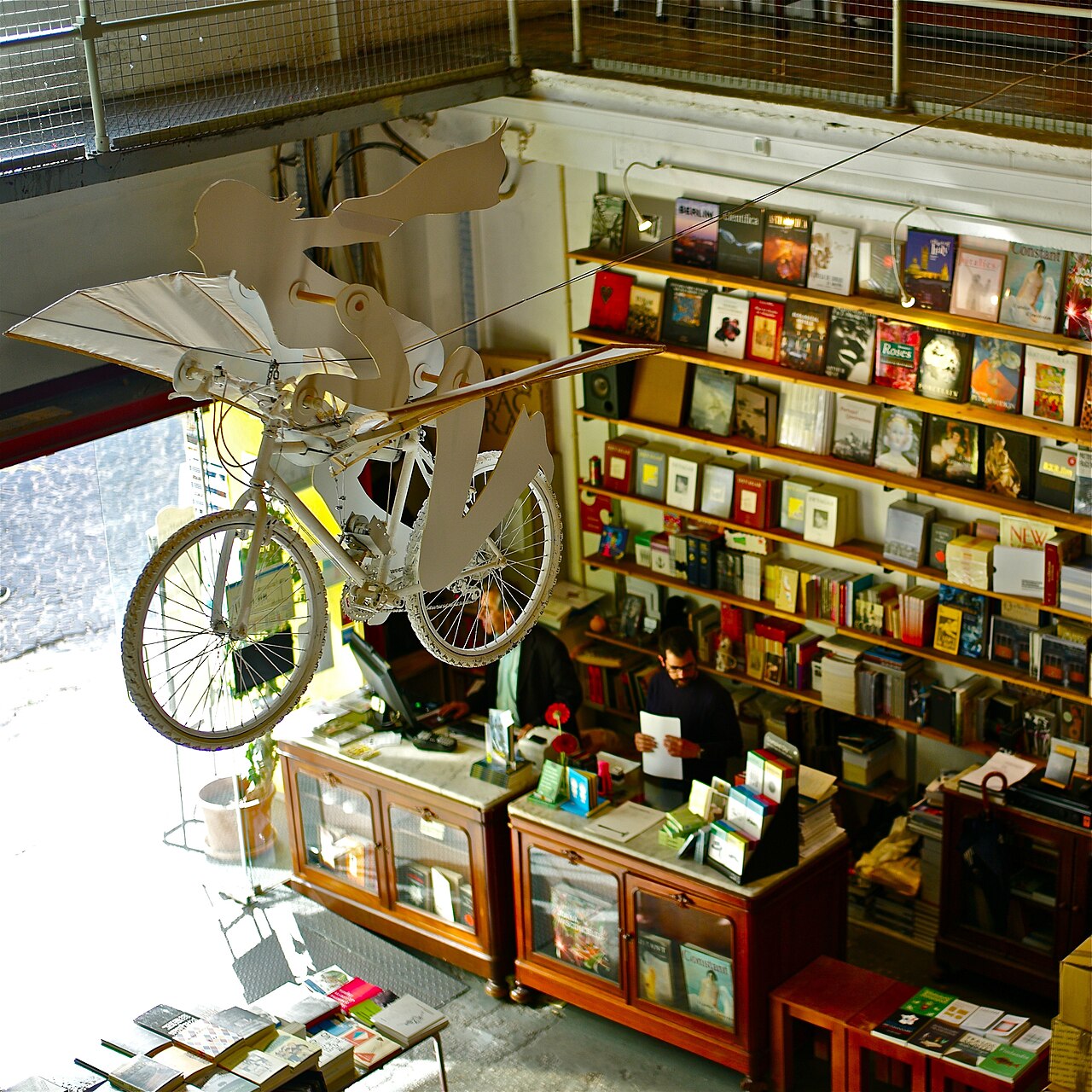
Ler Devagar bookshop, LX Factory, Lisbon — a two-storey bookshop with a flying bicycle sculpture suspended above the shelves.

Ler Devagar

LX Factory, Alcântara — a 10-min Uber or the 773 bus

One of the most beautiful bookshops in the world, built inside an old print factory. Two floors, a flying bicycle hanging above the shelves, a café downstairs. The name — Ler Devagar — means "read slowly." Try not to buy a book. You will anyway.

The walk doesn't need this stop. Neither do most of the best things.

Afterwards

If you want something to read when you get in: Welcome to Your World by Sarah Williams Goldhagen. A patient, brilliant book on how buildings and streets quietly work on us — and how we might push back. Pairs with Lisbon better than you'd think. Or leave it unread for six months. A tradition on both sides of the Irish Sea.

— an Irish friend